
Find the Source Before You Choose a Fix
Basement water comes from four places. A plumbing leak, surface water from rain and snowmelt, groundwater that rises through the floor, and condensation. Each needs a different fix, and a fix aimed at the wrong one wastes money.
Tape a square of plastic wrap to the wall or floor and leave it for two days. Moisture on the outside of the plastic is condensation from the air. Moisture on the inside means water is coming through the concrete. If neither shows but the floor is wet, suspect a plumbing leak and see leak detection.
What Works From the Inside
| Method | What it does | Limits |
|---|---|---|
| Interior drain tile and sump | Collects water at the floor edge and pumps it out | Manages water, does not stop it entering the wall. |
| Crack injection | Seals a single leaking crack | Does not help with many cracks or a wall under pressure. |
| Vapor barrier and dehumidifier | Controls humidity and condensation | Does not stop liquid water. |
| Waterproof paint or sealer | Coats the surface and stops light dampness | Fails under water pressure from behind. |
What Waterproof Paint and Floor Coatings Cannot Do
A coating sits on the surface. Water pushing from behind builds pressure and lifts the coating, so it peels or blisters. Painting over a damp wall can also trap moisture and encourage mold.
Floor coatings and waterproof flooring have the same limit. They keep water out of the flooring but they do not stop water entering the slab. If you plan to finish a basement, fix the water path first, and then choose finishes that tolerate moisture.
Not sure where your water is coming from?
Describe where and when it appears and we will help narrow it down.
How an Interior Drain System Works
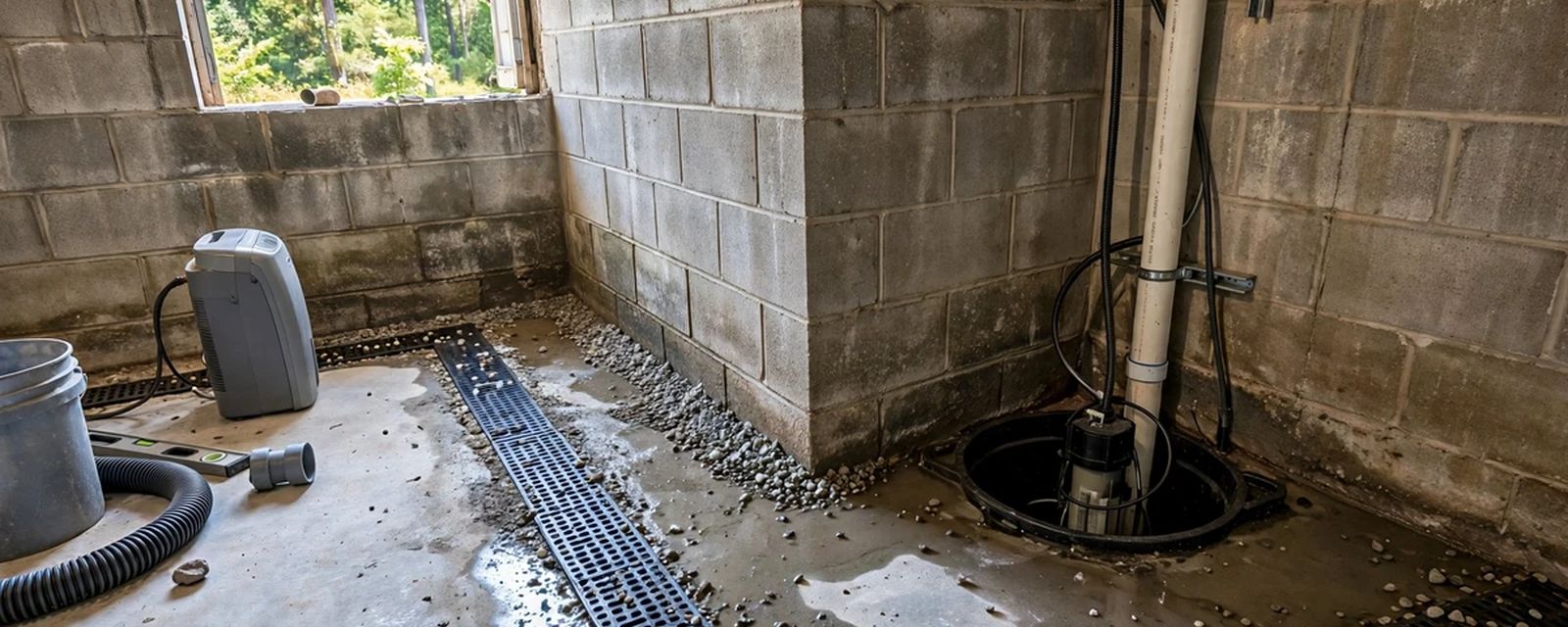
A trench is cut along the inside edge of the floor, a perforated pipe is laid in gravel, and the trench is closed with concrete. Water that enters at the wall seam runs into the pipe and then to a sump pit, where a pump sends it away from the house.
The system does not stop water from reaching the wall. It gives the water an exit so it does not rise onto the floor. It needs a working pump, so read sump pump repair before you rely on it.
Cheap Outside Fixes That Often Solve the Problem
Gutters and downspouts
Clean them and extend downspouts several feet from the wall.
Grading
The soil should slope away from the foundation.
Window wells
Clear them and make sure they drain.
Landscaping
Move beds and mulch that hold water against the wall.
Irrigation
A sprinkler head aimed at the foundation soaks the wall.
When to Dig Outside Instead
Inside works for
- Groundwater at the floor-wall joint.
- A few leaking cracks.
- A home where outside access is limited.
- A budget that cannot cover digging.
Outside is better for
- A wall leaking along its whole length.
- Failing exterior waterproofing.
- Grading that cannot be fixed another way.
- A plan to dig for other work.
Managing Humidity After the Water Is Under Control
Once liquid water is managed, humidity is the next issue. A basement that stays above about half humidity invites mold and a musty smell. A dehumidifier with a drain hose that runs to the sump or a floor drain keeps the air dry without constant emptying.
Seal obvious air leaks around windows and rim joists, and run a bathroom fan or a vent where moisture builds. These small steps make the finished space more comfortable and protect the framing.
What Interior Waterproofing Costs Depend On
The price of an interior system depends on the length of wall and floor to treat, the condition of the concrete, the depth and the finish above the slab. A finished basement costs more to work on because walls and flooring must be removed and replaced.
Ask for a written scope that lists the length of drain, the size of the pit and the pump, the discharge route, and the restoration. Compare scopes, not totals, and ask what warranty comes with the work.
Dealing With Mold and Damp Materials
Wet drywall, carpet and insulation can grow mold in a day or two. Remove soaked carpet and pad, cut away wet drywall and dry the area with fans and a dehumidifier. Do not paint over a stain until the cause is fixed and the material is dry.
If mold covers a large area, hire a remediation professional, and wear a mask and gloves while you work in the meantime. Fix the water first, or the mold returns.
Basement Water in Short
If you remember only a few things from this guide, remember these.
- Find the source before you buy a product.
- Paint and coatings cannot hold back water pressure from behind.
- Drain tile and a sump manage groundwater from inside.
- Fix gutters and grading first, because they are cheap.
Moisture Guidance From Public Agencies
The Environmental Protection Agency (EPA) advises drying wet materials within 24 to 48 hours to prevent mold, and says to fix the source of the water first. That matches the order we recommend for a basement.
The International Residential Code (IRC) addresses drainage and damp-proofing for new foundations, and the same principle guides repairs to an old one.
Check With the City Before You Change Drainage Near the River
After the September 2013 flood, Evans applied a six month building moratorium in its floodplain, and its rules there remain a concern for anyone planning below-grade work. If your property is in or near the floodplain, ask the city whether the work needs a permit, and keep the answer in writing.
We can help you decide what the basement needs, and we serve Evans and Greeley. See basement waterproofing and the service area page for nearby towns.
Source: Colorado resiliency page on the 2013 flood