
Where Is the Water Coming From?
Basement water falls into a few categories, and the fix depends on which one you have. We check each before recommending anything. Homes across the border in Greeley sit on the same South Platte groundwater, so we handle basement moisture there too.
Plumbing leaks
A supply or drain line leaking in the wall or slab looks like groundwater but is not. A meter test and leak detection separates the two.
Surface water
Rain that runs toward the foundation because of bad grading, short downspouts or clogged gutters. This is the cheapest to fix.
Groundwater
Water that rises through the floor or the wall seam when the water table is high. It needs drainage and a pump.
Condensation
Humid air meeting a cool wall looks like a leak. A dehumidifier and ventilation fix it.
Signs Your Basement Has a Water Problem
White powder on walls
Efflorescence shows that water has moved through the concrete and left minerals.
Damp or musty smell
Moisture is present even if you do not see a puddle.
Water along the floor-wall joint
Groundwater pressing at the cove joint.
Cracks that weep after rain
Water enters through foundation cracks.
Floor drain that overflows in storms
The drain and sewer cannot keep up, or the city line is overloaded.
Rust on the bottom of the furnace or water heater
Repeated moisture at floor level.
Why Waterproof Paint and Floor Coatings Often Do Not Work
Many people search for waterproof basement paint or flooring, and these products have limits. A coating sits on the surface, and water pressing from behind pushes it off. Wet concrete can also trap moisture under a floor finish and grow mold.
We recommend finishing a basement only after the water path is fixed. If you want a floor finish later, ask us what the slab and wall moisture look like first.
From the Inside or the Outside
| Approach | What it does | Fits when |
|---|---|---|
| Grading and gutters | Moves surface water away from the wall | Water appears after rain or snowmelt. |
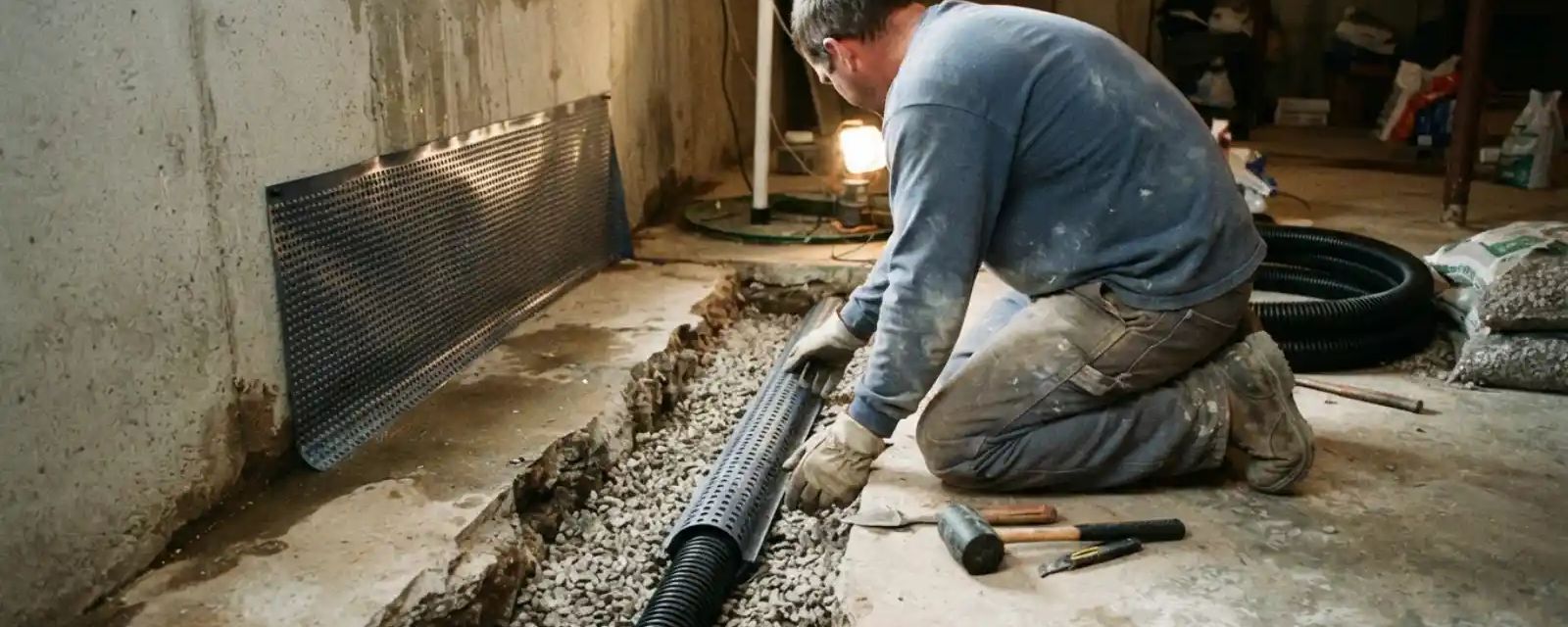
| Interior drain tile and sump | Collects water at the floor edge and pumps it out | Groundwater seeps at the floor-wall joint, see sump pump repair. |
| Crack repair | Seals a single leaking crack | One crack weeps and the wall is otherwise sound. |
| Exterior excavation | Waterproofs and drains the outside wall | Major wall leaks and a plan to dig, often costly. |
Describe where the water appears
A short call tells us whether to start with plumbing, grading or drainage.
Moisture Guidance for Basements
The Environmental Protection Agency (EPA) advises drying wet materials within 24 to 48 hours to prevent mold. Its guidance on moisture control also stresses fixing the source of water before repairing finishes.
The International Residential Code (IRC) addresses foundation drainage and damp-proofing for new construction. For an existing home, we follow the same principle, which is to manage water at the source first.
What Decides the Cost of Waterproofing
We give a clear price before starting. Call for your real number.
Insurance: sudden flooding may be covered, but gradual seepage usually is not. Ask your insurer before work begins.
Floodplain and Rules to Know in Evans
The South Platte crested near 19 feet at Evans in September 2013, and the city put a six month moratorium on floodplain building afterward. If your home is in or near the floodplain, check with the city before altering drainage or adding below-grade space. That protects you from a permit surprise and keeps the work legal.
Source: Colorado resiliency page on the 2013 flood