
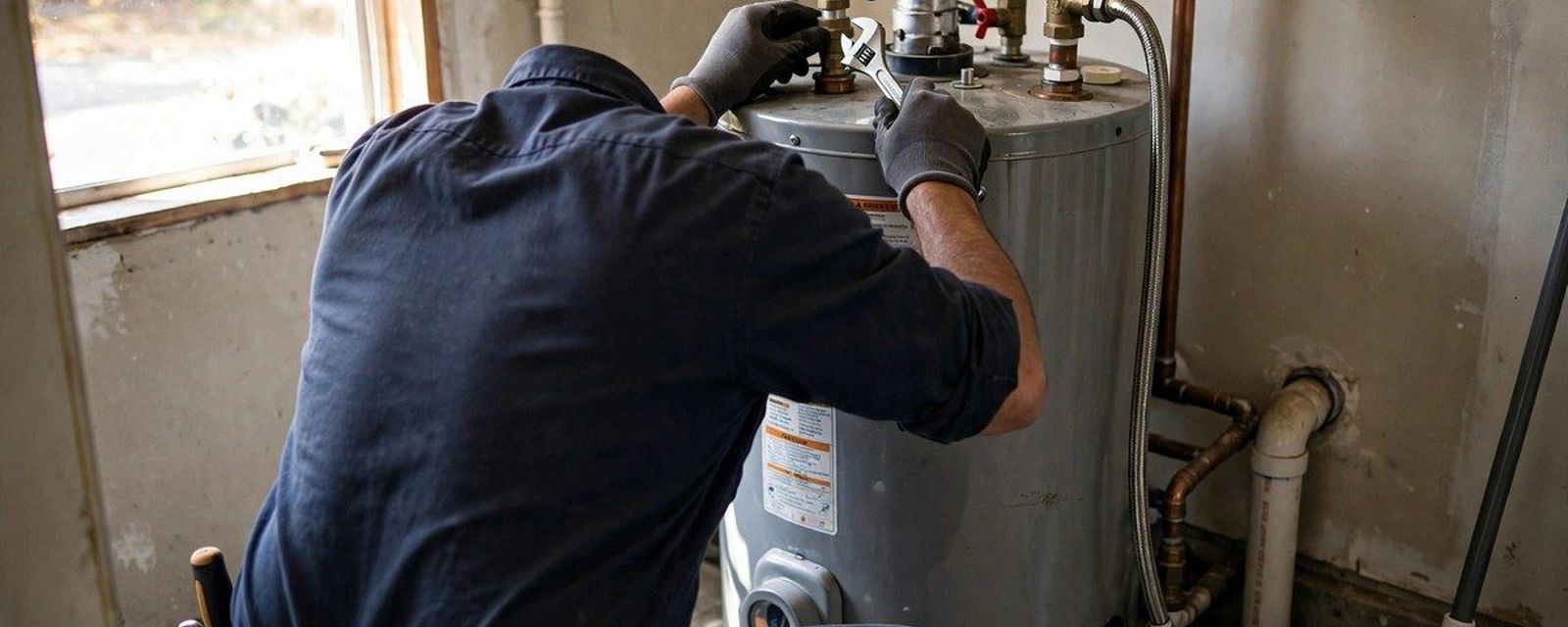
Why Copper Near a Water Heater Wears Out
Hot water and temperature swings stress copper joints. Each heating cycle expands and contracts the pipe a little, and over years the soldered joints can crack or the pipe can thin. Where copper meets the steel of the tank, an electrochemical reaction called galvanic corrosion eats at the fitting if no dielectric barrier is in place.
Hard water adds scale at the joints. Acidic condensate drips from a gas vent or a leaking relief valve can also corrode the pipe. The result is a connection that looks fine until it weeps and then fails.
Signs the Pipes at Your Heater Need Replacing
Green or white crust at a joint
Mineral and corrosion buildup shows a slow leak that has been going on a while.
Pipe feels rough or pitted
The surface is thinning from the inside.
Dripping that stops and starts
Some leaks seal themselves with scale and reopen when the pipe flexes.
Rust on the tank top
Water has been running down from a fitting above.
Pipe is discolored from heat
Scorching near a burner or a flue means the pipe is too close.
Copper, PEX and Flexible Connectors Compared
| Material | Where it fits | Watch for |
|---|---|---|
| Rigid copper | Long, straight runs with lead-free solder or press fittings | Needs skilled sweating, and flame near gas is a risk. |
| PEX with approved fittings | Short runs from the shutoff to the tank in many installs | Must be listed for hot water, and not used right at a gas flue. |
| Stainless flex connectors | Last few inches to the tank | Replace with each new heater. |
| Dielectric unions or nipples | Joint between copper and a steel tank | Needed to prevent galvanic corrosion. |
Seeing green crust or a drip at your heater?
Call and describe where the leak is. We will tell you what is likely before we arrive.
What a Replacement Involves
We close the water, shut off the gas or power, and drain the tank part way so we can work. We cut out the failed section, back to sound pipe, and fit new pipe with the right connections. At the tank we use dielectric unions or flexible connectors, and we fit a new shutoff if the old one is stiff.
Then we refill the tank, bleed the air from the lines, relight the pilot or restore power and test every joint under pressure. A good job leaves the area dry and the connections serviceable, so the next heater swap is not a rebuild.
DIY or a Plumber
A handy owner can
- Replace a flex connector with matching fittings.
- Replace a shutoff valve with push-fit parts if allowed.
- Check for leaks with a dry paper towel.
- Tighten a loose union.
Call a plumber for
- Soldering or pressing copper near gas or a flue.
- Work that changes the relief valve piping.
- Anything that needs a permit.
- Pipe in poor condition throughout.
The Best Time to Replace the Pipes Is During a Heater Swap
The pipes around a heater are easiest to replace when the heater is out. The area is clear, the water is off and the cost of labor is shared across the job. If your heater is more than ten years old and the pipes are crusty, plan to renew them together.
If you are replacing an old tank, read water heater replacement for how we handle the swap, or call about water heater repair if the unit is sound and only a connection leaks.
Why Soldering Near a Gas Heater Needs Care
Soldering copper uses an open flame, and a water heater sits next to gas lines, vents and sometimes stored products. A careless torch can ignite a nearby material or damage the flue. A plumber protects the area with a heat shield, keeps a fire extinguisher at hand and checks the surroundings before lighting up.
Press fittings and push-fit connectors let a plumber work without a flame where the code allows. They are a good choice in tight spaces, and they still need proper cuts and a clean, deburred pipe end to seal.
Keeping Records After the Work
Take a photo of the finished connections and keep the invoice. If a connection leaks later, the photo shows how it was made, and the invoice shows who made it and when.
If you sell the home, a buyer's inspector will look at the heater area. Clean, labeled work and a permit record reassure the buyer and speed the sale.
Heater Pipes in Short
If you remember only a few things from this guide, remember these.
- Green crust and pitting mean a joint is failing.
- Use dielectric fittings where copper meets the steel tank.
- Replace the pipes at the same time as the heater when you can.
- Ask the plumber to note the pipe materials for your records.
Standards for Copper and Fittings
Copper water tube is made to ASTM B88, and the International Plumbing Code (IPC) requires lead-free solder and fluxes on drinking water systems. Federal rules define lead-free for plumbing.
Where copper meets the steel of the tank, plumbers use a dielectric fitting to prevent galvanic corrosion, and the manual for the heater is the guideline to follow.
Lead, Service Lines and the Pipes in Your House
Evans reported a lead 90th percentile of 6.8 parts per billion in 2024, against a 15 parts per billion action level, and the utility must inventory its service lines. A copy of the inventory is available from the city at 970-415-3554. The results are within the action level, but the inventory is the way to learn what your service line is made of.
If you replace pipes at your heater, ask your plumber to note what material the line from the meter is. That record helps if you ever plan a bigger replacement. We work in Evans and in Greeley, and you can find our service area on its own page.
Source: City of Evans water quality report and service line inventory notice