
Work Out Where the Clog Is First
Before you pick up a tool, find out how far the clog reaches. If only one fixture is slow, the clog is in that fixture or its branch. If two or more are slow, the problem is further down. If a floor drain backs up when you run a sink, the main line is involved.
One fixture is a job you can try. Several fixtures at once is a job for a machine, and trying to force it can push water back into the house. See sewer line cleaning for main line backups.
Clearing a Kitchen Sink
Start with hot water and soap
Run hot water and add a good squirt of dish soap. Grease often responds to heat and a surfactant.
Plunge a sealed sink
Block the other drain with a wet rag, fill the sink to cover the plunger cup and push and pull firmly. Do not use a toilet plunger that has touched a toilet.
Clean the trap
Place a bucket under the curved pipe, loosen the slip nuts by hand and empty the trap. Clean it, replace the washers if they are flat and reassemble.
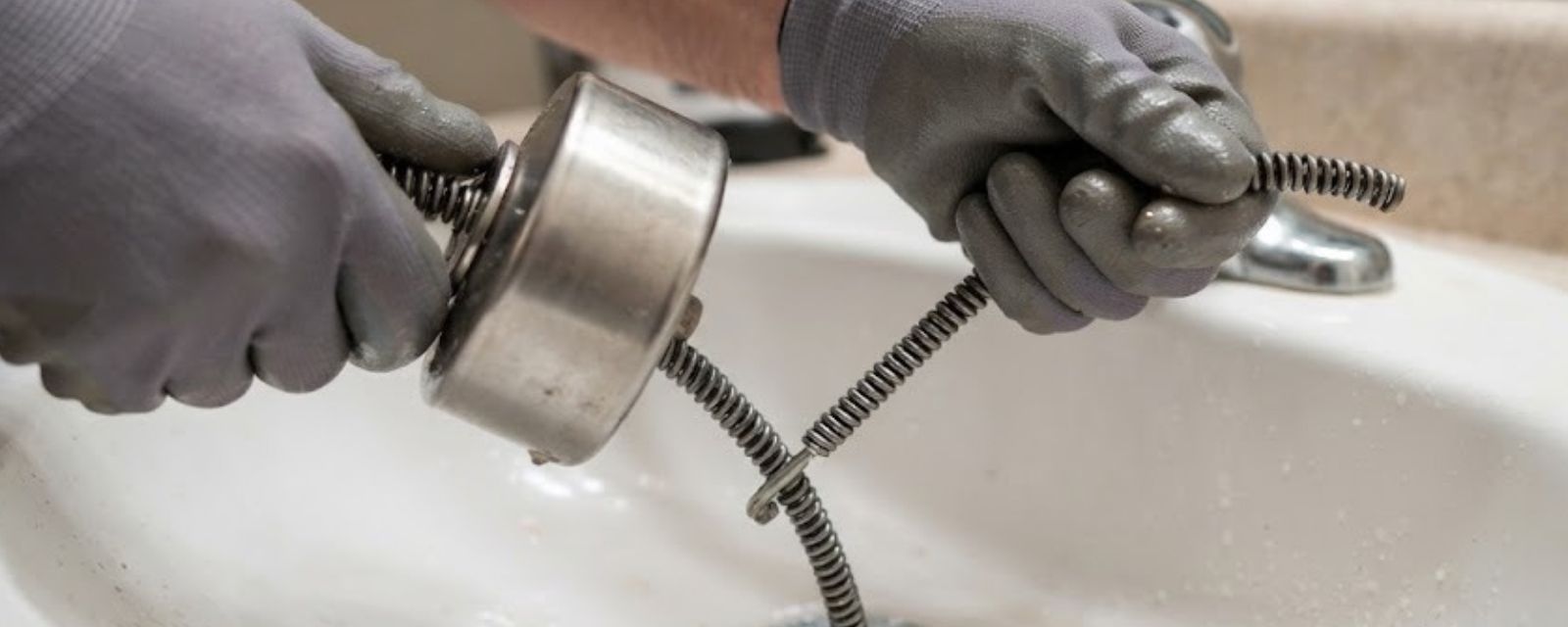
Use a hand auger
A small cable reaches past the trap into the wall. Feed it slowly and turn the handle until you feel the clog.
Bathroom Sinks, Showers and Tubs
A bathroom sink clogs with hair and soap scum that gather on the stopper and in the trap. Pull the stopper and clean it, then clean the trap as above. A plastic drain tool with barbs pulls hair from the drain, and it costs very little.
Showers and tubs clog with hair and soap. Remove the strainer, and use the same barbed tool or a small auger. If the water is slow in the whole bathroom, the clog may sit where branch lines meet. That is when to stop and call.
Common Home Remedies and Their Limits
| Remedy | What it does | Limit |
|---|---|---|
| Baking soda and vinegar | Fizzes and loosens light buildup | Does not clear a real clog. |
| Boiling water | Melts grease in metal pipe | Can soften PVC joints and crack porcelain. |
| Chemical opener | Dissolves some organic matter | Harsh, unsafe in standing water and hard on older pipe. |
| Enzyme cleaner | Breaks down organic buildup over time | Slow, not for an active clog. |
Tried the basics and it is still slow?
Call and tell us what you tried. We will tell you what to expect.
Keeping Drains Clear Month to Month
The cheapest drain cleaning is the kind you never need. Scrape plates into the trash, wipe pans before washing and never pour grease down the sink. Use hair catchers in showers and tubs, and clean them weekly.
Once a month, flush the kitchen drain with hot water and soap. If you have a disposal, run cold water while it runs and for a short time after. These steps keep the pipe wall clear so a cable is not needed.
Signs It Is Not a Simple Clog
Several fixtures slow together
The blockage is in a shared line.
Gurgling from drains elsewhere
Air is pushed through a partial blockage in the main.
A clog that returns in days
The pipe wall is coated or damaged. See drain cleaning.
Sewage smell or standing water in a floor drain
The main line is affected.
A Small Toolkit Worth Keeping at Home
A few inexpensive tools solve most household clogs. Keep a cup plunger for sinks and a flange plunger for toilets, a barbed plastic drain tool for hair, a small hand auger, a bucket, rubber gloves and a pair of slip joint pliers for the trap nuts.
Store them together under a sink or in a closet where everyone can find them. When a clog hits at night, you will be glad you do not have to hunt for a bucket.
Safety Notes Before You Start
Turn off the disposal at the switch and unplug it before you work on a kitchen drain. Wear gloves and eye protection, since a clogged trap can spray. Never mix drain chemicals, and never plunge after using a chemical opener, because the liquid can splash back onto you.
If you used a chemical opener before you called anyone, say so. The plumber needs to know before opening the trap.
Clearing Drains in Short
If you remember only a few things from this guide, remember these.
- Work out how many fixtures are slow before you pick a tool.
- Soap, hot water, a plunger and a trap cleaning solve most single clogs.
- Avoid chemical openers, and call when several drains slow together.
- A monthly flush and good kitchen habits prevent most clogs.
Why Traps and Vents Exist
The International Plumbing Code (IPC) requires a trap under every fixture. The trap holds water that blocks sewer gas, and it is also where hair and grease collect, so cleaning it is a normal part of maintenance.
The code also calls for vents. A drain that gurgles may need venting help and not only cleaning.
Renters, Landlords and Shared Lines Near the Greeley Border
The 2006 John Evans Neighborhood Plan studied an area that crosses the Greeley and Evans border. It counted 894 structures in Greeley and 564 in Evans, including owner-occupied homes, rentals, apartments and mobile home parks. In buildings with shared lines, a clog may belong to a neighbor, and a rental clog may be the landlord's responsibility.
If you rent, report the problem to your landlord in writing and keep the date. If you own a building with several units, tell us how many units share the line when you call. We serve Evans and Greeley, and the service area page lists nearby towns.
Source: John Evans Neighborhood Plan study area summary, 2006