
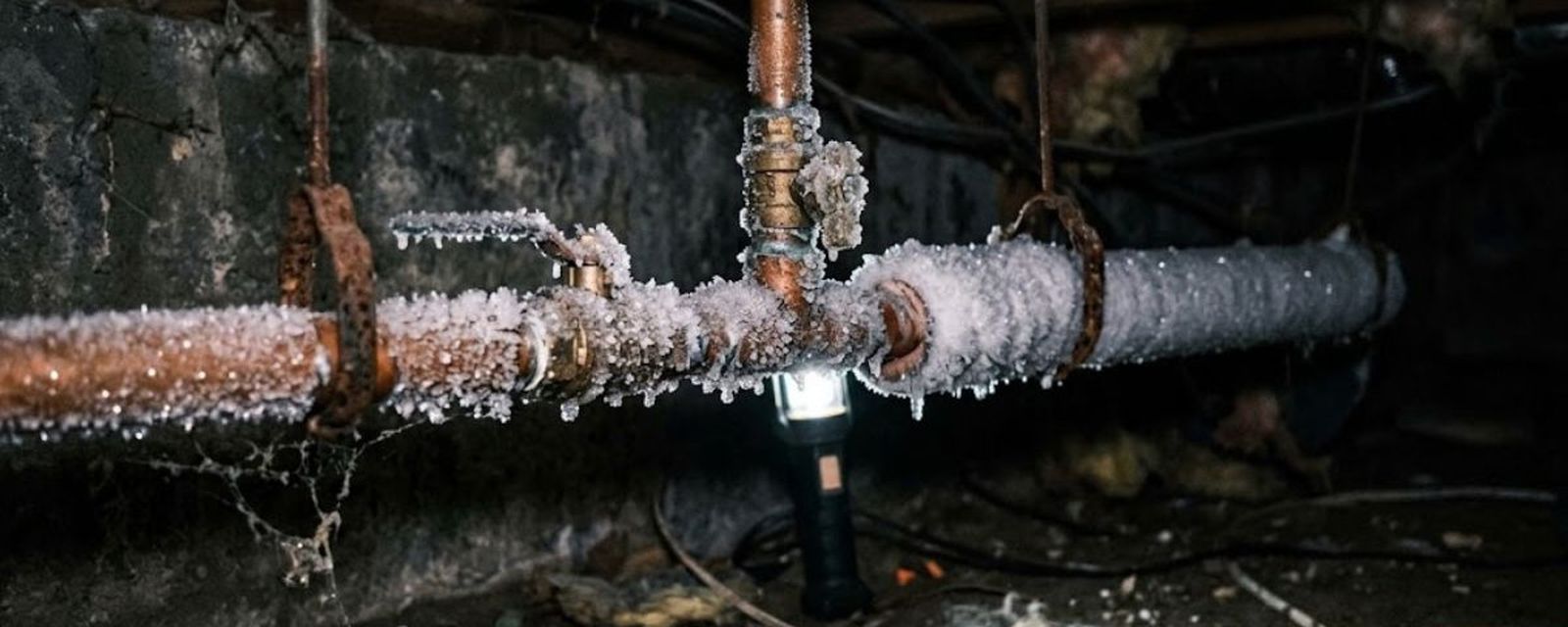
Faucet Barely Running in Cold Weather? Do This
A trickle or no water at a tap during a cold snap is the classic sign.
- Leave the faucet open so water can move as the ice melts.
- Find the likely frozen section, often on an exterior wall, in a crawlspace or in a garage.
- Warm the pipe slowly with a hair dryer, a heating pad or warm towels.
- If you see water spraying or a bulge, close the main valve and call us.
How a Frozen Pipe Becomes a Burst Pipe
Water expands as it freezes. Ice in a pipe builds pressure between the ice plug and the closed faucet. The pipe often splits not where the ice is, but between the ice and the tap where pressure peaks.
The split may not leak until the ice melts. That is why a pipe that froze overnight can flood the house at noon. After you thaw a pipe, check every inch of it for cracks, and watch for dripping or damp spots for a day.
Thawing Methods: What Is Safe and What Is Not
| Method | Verdict | Why |
|---|---|---|
| Hair dryer on low | Safe | Gentle, controlled heat. |
| Heating pad or warm towels | Safe | Slow and steady. |
| Space heater aimed at the wall | Use with care | Fire risk, never leave unattended. |
| Open flame or torch | Never | Fire risk and it can damage pipe and solder. |
| Boiling water poured on the pipe | Avoid | Thermal shock can crack a weak pipe. |
Cannot find the frozen section or see a split?
Close the main valve and call. We thaw, repair and check the whole line.
Where Pipes Freeze First in a House
Exterior walls
Pipes against a cold wall with thin insulation are the first to freeze.
Crawlspaces and unheated basements
Cold air moves in and the pipes have no heat.
Garages
Supply lines to laundry or a utility sink are at risk.
Outdoor spigots
A hose left on holds water in the pipe.
Under sinks on outside walls
Cabinet doors keep warm air out.
What We Do When a Pipe Has Split
We close the water, open the wall or floor to reach the break and cut out the damaged section. We replace it with new pipe of the right type, test the repair under pressure and check nearby pipes, since a freeze often hits more than one spot.
If the burst has flooded the area, we help you stop the water and document the damage for your insurer. See burst pipe repair for the full process, and leak detection if you suspect water in a wall.
Before the Cold and During It
Before the cold
- Insulate pipes in crawlspaces, garages and exterior walls.
- Disconnect hoses and drain outdoor spigots.
- Seal gaps that let cold air reach pipes.
- Know where your main shutoff is.
During the cold
- Open cabinet doors under sinks on outside walls.
- Let a faucet drip on the coldest nights.
- Keep the heat on, even when away.
- Check pipes in unheated areas.
If You Are Leaving the House in Cold Weather
A house that is empty in a cold snap is the most at risk. Keep the heat on, set a minimum of about 55 degrees, open cabinet doors under sinks and ask a neighbor to check the house. If you are away for a long time, shut off the main valve and drain the lines.
A smart water sensor near the water heater and under sinks can send an alert if a pipe lets go. It is a small purchase that can save a house.
What to Check Once the Water Flows Again
When the pipe thaws, turn the water back on slowly and walk the house. Look at ceilings, walls under the affected pipe, the floor below and the meter. Check that the meter stops moving when every fixture is closed.
Watch for damp spots over the next day, and run each faucet to check for pressure and clear water. If the pipe is cracked or a joint is loose, shut off the water and call. A repair now is far cheaper than a ceiling next week.
Choosing Insulation That Works
Foam sleeves are easy to fit on straight pipe and are cheap. Heat tape and cables add warmth where a pipe runs through a cold space, but they must be rated for the pipe and installed to the maker's instructions. Never overlap heat tape or cover it with insulation it was not designed for.
Seal air leaks at the rim joist and around penetrations too, because moving air does more harm than still cold. Insulating the pipe without sealing the leak leaves the pipe in a draft.
Frozen Pipes in Short
If you remember only a few things from this guide, remember these.
- Open the faucet and thaw slowly with a hair dryer or warm towels, never a flame.
- A split pipe leaks when it thaws, so check carefully and close the main if you see damage.
- Insulate pipes in cold spaces, seal drafts and disconnect hoses in the fall.
- Verify any contractor license before you sign.
Pipe Materials and Freeze Damage
The International Plumbing Code (IPC) lists approved water pipe materials, and the standards behind them, such as ASTM B88 for copper and ASTM F876 for PEX, describe how each performs. PEX tolerates freezing better than rigid pipe, but fittings can still fail.
According to the IPC, pipes should be protected from freezing where they are exposed to cold, which is why insulation and sealing air leaks matter.
Hiring for the Repair in Evans and Checking the License
After a freeze, a flood of calls for repairs can bring out contractors you do not know. The Colorado State Plumbing Board licenses plumbers, apprentices and plumbing contractors and offers a licensee search on its website. You can call the board at 303-894-7800. Before you sign, ask for the license number and look it up.
Evans also requires every contractor to hold an Evans business license, and plumbing contractors put state license numbers on permit applications. We serve Evans and Greeley, and the service area page lists the towns nearby.
Source: Colorado State Plumbing Board and City of Evans contractor pages