
Signs of an Underground Leak
Underground leaks are quiet, so the signs are indirect. A water bill that rises with no change in habits is the first. A wet or unusually green patch of lawn along the line to the house is another. You may also notice weak pressure, the sound of water when everything is off, or a meter that never stops.
In winter, a leak in the service line can melt snow along its path. If you see a strip of bare ground in a snowy yard, mark it and tell the plumber.
The Meter Test That Confirms a Leak
This test takes five minutes and needs no tools. It separates a leak from normal use.
- Turn off every faucet, appliance and ice maker, and make sure nobody flushes.
- Open the meter box and find the small low-flow indicator. A spinning dial or a moving triangle means water is flowing.
- Close the main valve at the house and look again. If the indicator keeps moving, the leak is between the meter and the house.
- If it stops, the leak is inside the house, such as a toilet or a supply line.
How a Plumber Pinpoints the Leak
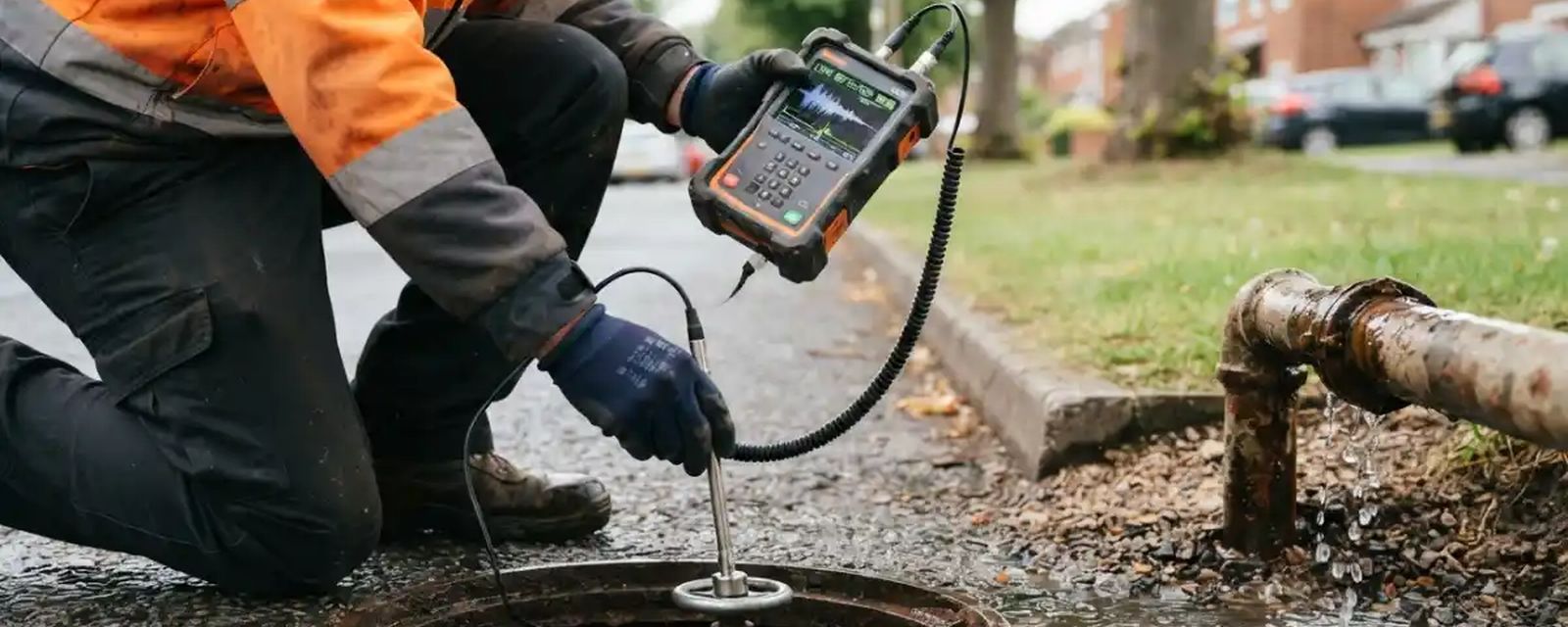
Once the leak is confirmed, we find it without digging the whole yard. We isolate the service line and test it under pressure to see whether it holds. Then we use electronic listening equipment to hear the sound of water escaping through the pipe, and we trace it along the surface.
On slabs and in finished areas, thermal imaging can help confirm a warm leak. The goal is to open the smallest possible area. See leak detection for our full process.
Whose Leak Is It?
Before the meter
- The line belongs to the water utility in most cases.
- The meter test shows no flow with the main closed.
- Call the utility to report it.
- Keep a record of your readings.
After the meter
- You are responsible for the line.
- The meter moves with the house closed off.
- A plumber locates and repairs it.
- Insurance may cover some of the damage.
Meter still moving with everything off?
Call with the reading and we will plan the leak search.
What Happens After the Leak Is Found
A small leak is a spot repair. We dig only the area over the pipe, cut out the damaged section and splice in new pipe with the right fittings. A pipe with several leaks or heavy corrosion may be better replaced for the whole run.
We refill the trench, restore the surface where we can and test the line again. For a leak that points to a system-wide problem, see repiping for the bigger picture.
What Happens If You Wait
An underground leak is not an emergency until it becomes one. A slow leak can wash soil from under a slab, undermine a driveway or wet a foundation wall. The water bill goes up while the repair gets bigger.
If you suspect a leak, close the main valve when you leave the house for a long trip and run the meter test when you return. A moving meter after a week away is proof you have a leak, and it gives you a start date to give your plumber.
Different Pipes Leak in Different Ways
Copper pipe tends to pinhole from the inside when water is aggressive. Galvanized steel corrodes and clogs before it leaks. Plastic pipe cracks at joints or from shifting soil, and polybutylene fails at fittings. Knowing your pipe type helps the plumber guess where to look first.
If you do not know what the service line is made of, ask when the line is exposed. The material also helps decide between a spot repair and a replacement, which matters when the pipe is old and the soil is moving.
Underground Leak Symptoms and What They Suggest
Use this list to match what you see to a likely cause, then run the meter test to confirm.
Bill up, yard dry
The leak may be under the slab or inside a wall, or the water is draining into a gravel bed or sewer line.
Soggy lawn strip
A service line leak close to the surface, often between the meter and the house.
Pressure drop at every tap
A large leak or a failing main valve, worth an urgent check.
Hissing at the meter box
A leak near the meter, which may be on either side of it.
Mold or musty smell in a crawlspace
A slow leak in a supply line under the house.
Water in a window well or foundation corner
Check for a supply leak before you blame the rain.
Leak Hunting in Cold Weather
Frozen ground makes leaks harder to see and harder to fix. Water from a leak can freeze near the surface and hide the wet patch, while the ground thaws unevenly around a warm leaking pipe. Look for bare ground or a sunken strip in snow, and mark it before you call.
If a leak is found in winter, a crew may need to thaw the ground before digging. Plan for a longer visit, and keep the main valve closed if water is running into the soil.
Leak Detection in Short
If you remember only a few things from this guide, remember these.
- Run the meter test with every fixture off, and watch the low-flow indicator.
- Close the main at the house to learn which side of the valve the leak is on.
- Listening gear and pressure tests find a leak with a small dig.
- Keep your read history and dates, since they help with repairs and claims.
Pressure Limits and Leaks
The International Plumbing Code (IPC) limits static water pressure in a building to 80 pounds per square inch and calls for a pressure reducing valve above that. High pressure stresses joints and can create or worsen a leak.
A pressure gauge on a hose bib is a cheap way to check yours. If it reads high, a reducing valve is a sensible fix.
The Evans Meter and Your Water Records
Evans utility billing handles meter questions at 970-475-1170, Monday through Friday from 8 to 5, at 1100 37th Street. Ask for your read history and the dates of any jump, because those dates often point to the day the leak began. That also helps if you ask for an adjustment or file an insurance claim.
We work on leaks in Evans and also in Greeley, and our service area page lists nearby towns. Whichever utility serves you, the meter test is the same.
Source: City of Evans utility billing information