
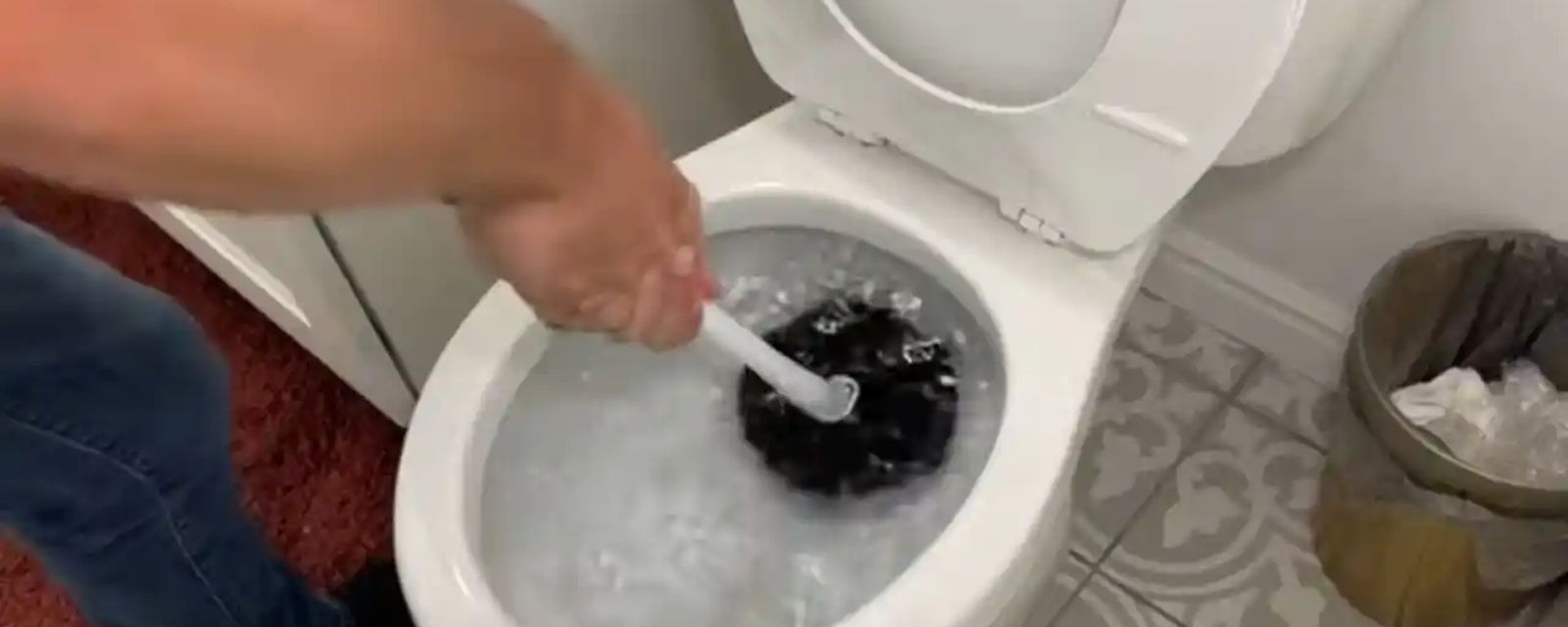
Stop the Overflow Before You Try Anything
Do not flush again. A second flush on a blocked toilet sends more water into a bowl that has no place for it to go. Lift the tank lid and press the rubber flapper down, or reach behind the toilet and turn the shutoff valve clockwise until it stops.
Once the water stops rising, put towels around the base and move rugs out of the way. If the bowl is already full to the brim, scoop some water into a bucket so you have room to work. Wear rubber gloves, because the water is dirty.
Five Ways to Clear a Toilet Without a Plunger
Hot water and dish soap
Squirt a generous amount of liquid dish soap into the bowl, then pour a bucket of hot tap water from waist height. Do not use boiling water, which can crack porcelain. Wait twenty minutes and see if the level drops. The soap lubricates the blockage and the heat softens paper and waste.
A wet and dry vacuum
If you own a shop vacuum, set it to wet mode, seal the hose around the drain opening with a towel and run it for a few seconds. It pulls the clog loose from the trap. Clean the hose afterward with a disinfectant.
A homemade plunger
A cut-off plastic bottle with the bottom removed and the neck pushed into the drain can create a seal. Push and pull gently to move the water back and forth.
A toilet auger
A short auger made for toilets reaches past the bend without scratching the bowl. Many hardware stores sell them, and one is worth keeping in the bathroom.
Waiting
Some clogs are paper that has swollen with water. Leaving the toilet alone for an hour often lets the paper break down. It is the one method that costs nothing and risks nothing.
Things That Make a Clogged Toilet Worse
People reach for shortcuts that cause damage or injury. Avoid these.
| Shortcut | Why it backfires |
|---|---|
| Chemical drain opener | It sits in a full bowl, burns skin and can damage older fittings. It also makes the plumber's job unsafe. |
| Repeated flushing | Every flush adds water that spills over the rim. |
| Coat hanger or wire | It scratches the porcelain and can push the clog deeper. |
| Boiling water | Thermal shock can crack the bowl. |
| Flushing wipes labeled flushable | They do not break down and can build a clog further down the line. |
Toilet still blocked and rising?
Call and describe what the bowl is doing. We can tell you whether it is a quick fix or a line problem.
Is It the Toilet or the Line?
A single toilet that is slow and gurgles is probably a local clog. If the shower gurgles when you flush, or the bathtub rises when the washer drains, the blockage is further down the line. A sink that backs up into a basement floor drain also points to the main.
In that case no plunger will help, because the water has nowhere to go. A main line clog needs a machine, and sometimes a camera. See sewer line cleaning for how we handle it, and toilet repair if the toilet itself is damaged or keeps running.
Keeping the Next Clog Away
Most toilet clogs come from too much paper, wipes, or items that do not belong, like paper towels and feminine products. Teach everyone in the house to flush only waste and toilet paper. Keep a plunger and a small auger where you can reach them, because the next clog will arrive at the worst time.
If clogs happen often in the same toilet, the toilet may have a weak flush from clogged rim jets or a low tank level. That is a repair, not a lifestyle issue. A plumber can test the flush and tell you whether a new toilet makes sense.
Handling the Mess Safely
Toilet water carries bacteria, so treat every splash as dirty. Wear rubber gloves and old shoes, and keep children and pets out of the bathroom until you are done. Open a window or run the fan if you can.
Afterward, wipe the floor and fixtures with a household disinfectant and wash your hands well. Launder towels on hot, and bag any paper towels you used. If water reached carpet or a wall, it needs drying quickly to avoid mold, so lift the carpet edge and run a fan.
Why Some Toilets Clog More Than Others
Not every toilet clogs the same. Older toilets with small trapways and low flush power are more likely to clog than modern designs, and a toilet with a worn flapper or a low water level in the tank may not flush with enough force to carry waste through the bend.
If you plunge or auger the same toilet every few weeks, the fix is not another tool. Have a plumber test the flush, clean the rim jets and check the tank level. A toilet that works hard to clear a few sheets of paper is a candidate for replacement, and a new one often pays back in fewer calls and less water.
Before you buy a replacement, check the rough-in distance from the wall to the drain, which is usually 12 inches. Buying the wrong size is the most common reason a new toilet does not fit.
What the Standard Says About a Toilet Flush
According to federal rules and the International Plumbing Code (IPC), a standard toilet may use no more than 1.6 gallons per flush. A fixture that low on water leaves less margin for paper, so a toilet that clogs often may need cleaning of the rim jets or a replacement.
The IPC also requires a vent on the drain. A slow flush with gurgling elsewhere can point to a vent problem and not only a clog.
When the Whole Street Backs Up in Evans
Evans knows what a sewer system under stress looks like. After the September 2013 flood, the city reported heavy damage at its wastewater plant and shut off sewer service for 8 days. Today, if your toilet clog comes with bubbling in other drains, ask a neighbor whether they have the same symptoms. If they do, the problem may be in the city main, and a call to the city will save you paying for a cleaning that cannot fix it.
We can tell by checking your cleanout. If the line is clear to the street, we tell you so and you can report it. If it is clogged on your side, we clear it. We serve Evans first and also serve Greeley, and you can see the full service area for the towns we cover.
Source: Colorado resiliency page on the 2013 flood